
What is an iron beam?
The beam is one of the most important and practical steel sections, which in the construction industry has the task of bearing the stresses caused by the forces applied to it. The iron beam has a cross section in the shape of the English letters I and H. In the buildings built on the basis of the metal frame, the iron beam has the task of bearing and transferring the loads that are imposed on the building.
Beams are versatile profiles that are often the preferred choice for designing columns, trusses, and beams due to their distinctive cross-sectional shape, alloy composition, and adherence to production standards. A beam consists of two main parts known as the flange and web, with the size and shape of these components determining the specific type of beam. The beam’s appearance and mechanical properties influence its various applications, including the IPN type.
Introduction of IPN iron beam
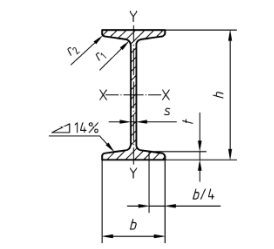
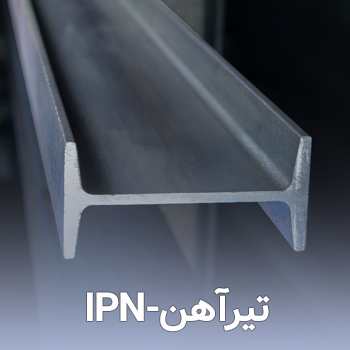
The IPN beam is similar to the English letter I. The flanges of this beam are tapered, such that the flange thickness is thin at the edge and gradually thickens near the center of the beam. IPN beams are produced according to a specific standard and are also known as S Beams or S Shapes.
In Iran, the IPN beam is known as the hot-rolled narrow taper flange I-beam and is evaluated and recognized according to the Iranian National Standard No. 3277.
In beams with the IPN standard, the thickness of the flanges is not uniform at different points; it increases with a gentle slope from the outer edge of the flange with lower thickness towards the web of the beam. The IPN beam can be produced in sizes from 80 to 550 mm, but it is usually produced in limited dimensions. The most common applications of the IPN beam are in the shipbuilding industry and telecommunication towers.
Appearance characteristics of IPN beam
The appearance of the IPN beam is in the shape of the English letter I, and the difference between the IPN beam and the IPE beam is that in the IPN beam, the flange thickness decreases as it moves away from the beam’s web.
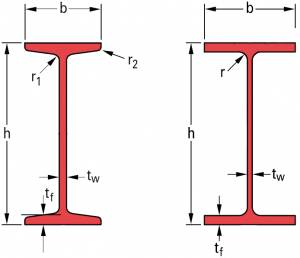
Various types of beams are usually named based on their appearance, cross-section, etc.
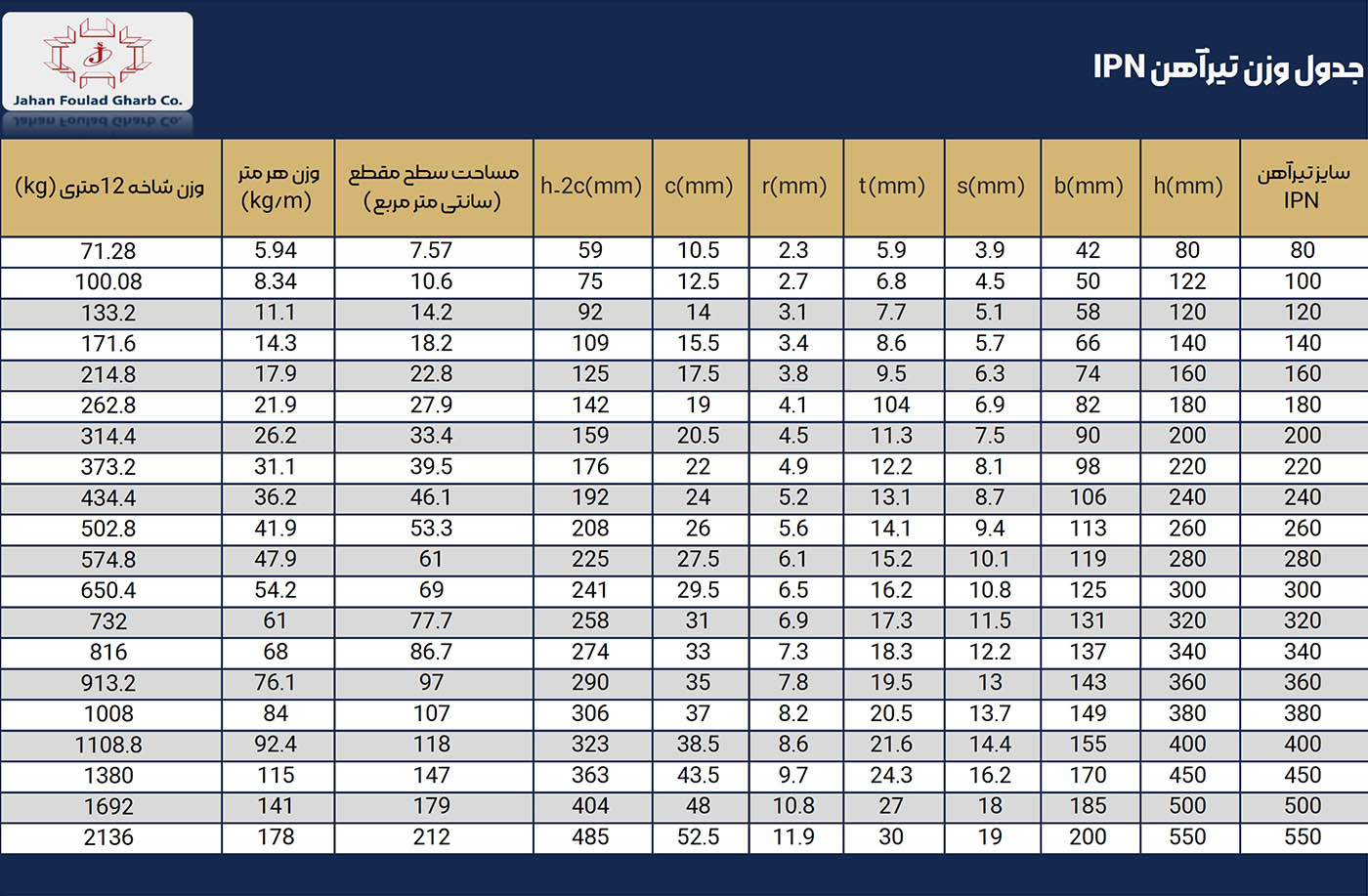
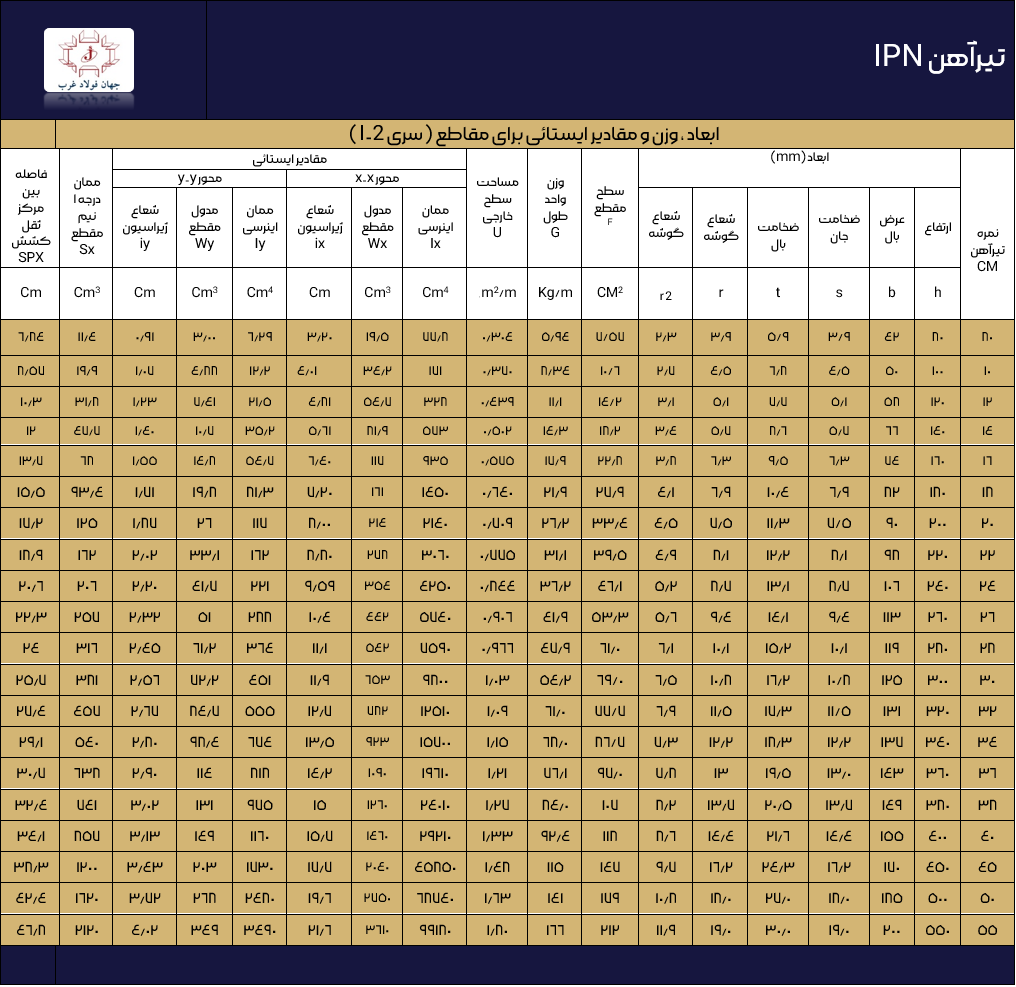
Dimensions, weight, and static values of the IPN beam
Applications of IPN beams
The IPN beam with tapered flanges is commonly used in industrial steel structures, sheds, trusses, small bridges, piers, and temporary or workshop structures. The cross-sectional shape of this beam makes it a suitable option in situations where ease of connecting components is important. Furthermore, IPN sections are used in certain mechanical equipment and industrial machinery that require beams with specific dimensions.
In summary, IPE is designed and selected for general building structures, and IPN for industrial structures and more specialized spaces.
- Construction of various types of ships
- Dam and dock construction
- Construction of high-rise towers
- Installation of trusses, columns, and roofs
Technical specifications of IPN beams:
Generally, this type of beam is produced with a depth ranging from 80 to 550 mm and varying flange widths from 42 to 200 mm.
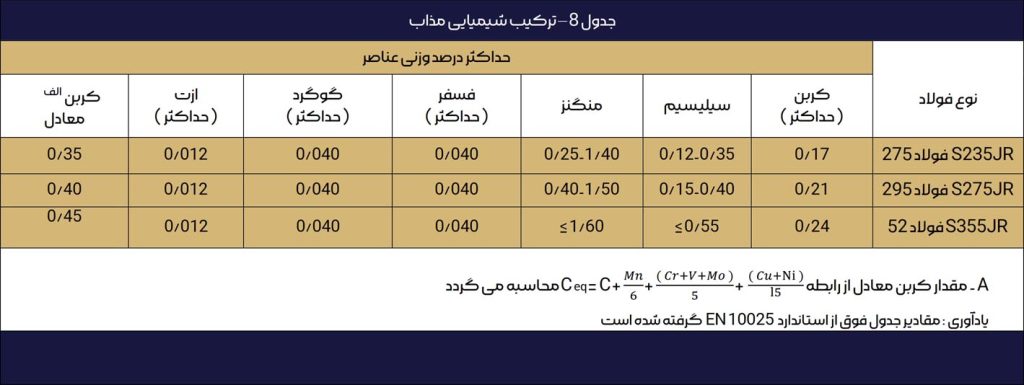
Other technical specifications of INP beams produced in Iran, in accordance with the Iranian National Standard No. 3277 titled “Hot-rolled narrow taper flange I-beams – Specifications and test methods”, can be observed in the tables below.
Advantages of using IPN beams
The main advantage of the IPN beam is its flange shape. When the flanges do not have a uniform thickness (i.e., they are tapered), it allows this type of beam to better resist bending at critical points of the structure. Other advantages of the IPN beam are similar to other beams and are as follows:
What are the advantages of the IPN beam?
- All beams, including the IPN beam, provide good compatibility for connection to other primary or secondary members of the building.
- Using beams leads to a reduction in operational costs.
- The IPN beam, like other beams, possesses high strength and durability.
- By using this type of beam, there is the possibility of subsequent expansion after the project is completed.
Disadvantages of using the IPN beam
In general, the main disadvantages of the IPN beam can be stated as follows:
- If the ambient temperature of the beams increases significantly, their strength decreases.
- If welding operations are used for beam connections, they might not have sufficient strength and the weld could fail. For this reason, it is better to use bolts and rivets to connect the components.